












Winter tourism industry thriving in China
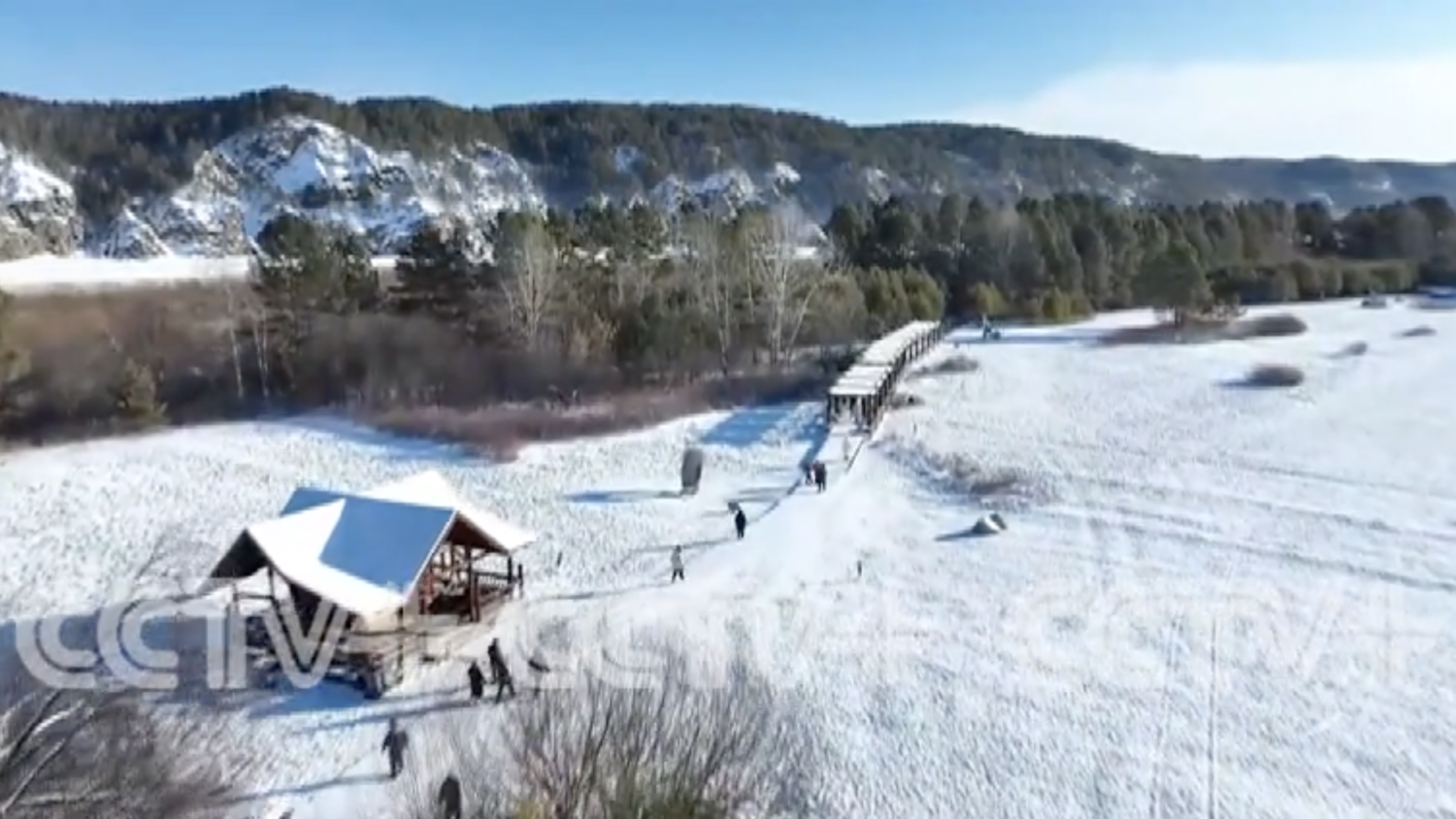
As snowfalls and frigid temperatures usher in the winter season, the ice and snow tourism market is gearing up for another bustling year.
In the previous ice and snow season, Harbin City of northeast China’s Heilongjiang Province welcomed a staggering 300 percent increase in tourist arrivals and a 500 percent surge in tourism revenue, encouraging many northeast cities to capitalize on the growing trend of winter tourism.
In November, Mohe City, located at China’s northernmost tip, recorded temperatures plummeting to negative 30 degrees Celsius. Eager tourists from the warmer southern regions flocked to experience the enchanting winter landscape.
“It’s exhilarating, and with the snowflakes falling, it’s truly a romantic experience for us southerners,” said a visitor Ying Xinni.
The potential for profit in this winter wonderland is immense. Although the ice and snow season has just begun, local businesses are already feeling the surge of enthusiastic tourists.
“Our ski resort has seen a continuous influx of visitors since we opened this month, with numbers doubling compared to the same period last year,” said Wang Hongliang, manager of the Beiji Ski Resort in Mohe.
The resort has expanded its snow trails and acquired additional skiing equipment to welcome the surge.
Meanwhile, over 20 new Bed and Breakfasts were opened in the nearby Beiji Village. Young entrepreneurs are also venturing into the area, introducing innovative services like travel photography and cultural creative industries.
“We have developed hundreds of cultural products this year and created a large complex covering an area of 20,000 square meters that involves cultural creativity, cafes, bars, and book lounges,” said Qiu Xiaoyun, a local innkeeper.
While Mohe is making strides, Harbin, which skyrocketed in popularity last year, is not resting on its laurels. The city is actively preparing for a range of ice and snow activities set to launch in December. The famed Harbin Ice and Snow World will expand to cover 100 hectares, equivalent to 140 football pitches. In response to visitor feedback from last year, the design team has optimized the layout to reduce waiting times, added warming stations, and enhanced interactivity while integrating more technological elements into the icy attractions.
Beyond Heilongjiang Province, winter tourism is gaining momentum in other northern regions. In Xinjiang’s Altay Prefecture, four major ski resorts have opened their doors, attracting thousands of snow enthusiasts daily. In Qinghai’s Qilian Mountains, tourists are enjoying trekking and educational activities on snowy terrains. Hebei’s Chongli has introduced night skiing, while Inner Mongolia’s Genhe offers unique experiences like reindeer sledding and birch bark painting workshops to entice visitors.
While the winter tourism boom brings economic benefits to various regions, improving infrastructure and providing warm, reliable services become a priority for the tourism providers this winter.
To facilitate travel, Heilongjiang has launched several provincial air routes connecting Harbin to Mohe and Fuyuan, the easternmost point in China. Additionally, special trains for ice and snow tourism have been introduced to key destinations.
Learning from last year’s challenges in communicating with international tourists, Harbin has initiated training for taxi and bus drivers to improve their English skills.
The rise of winter tourism is not only boosting the local economies but also driving the growth of related industries. From 2015 to 2023, China’s ice and snow industry expanded from 270 billion yuan to 890 billion yuan (37 billion U.S. dollars to 122 billion U.S. dollars). It is projected to reach 970 billion yuan (133 billion U.S. dollars) this year and to exceed one trillion yuan (138 billion U.S. dollars) next year.
“The consumer spending on winter tourism is significantly higher than on conventional tourism, with an average expenditure of over 1,000 yuan (138 U.S. dollars) per person per trip, indicating vast market potential,” said Dai Bin, director of the China Tourism Academy.
Statistics from the Ministry of Industry and Information Technology show that the number of companies in the ice and snow equipment sector jumped from around 300 in 2015 to approximately 900 in 2023, with the sales revenue skyrocketing from less than 5 billion yuan (688 million U.S. dollars) to about 22 billion yuan (3 billion U.S. dollars) during the same period.
