






‘Museum craze’ in China inspires archaeologists to dig deeper: CPPCC member
The rising popularity of museums across China reflects the booming public cultural demand and has inspired archaeologists to delve deeper into the profound history of Chinese civilization, said a member of the 14th National Committee of the Chinese People’s Political Consultative Conference (CPPCC) on Monday.
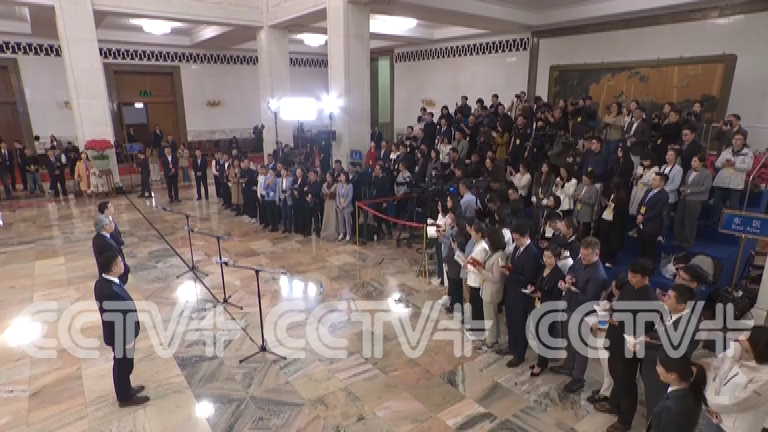
Chen Xingcan, a researcher at Institute of Archaeology under the Chinese Academy of Social Sciences, shared his observations during a group interview ahead of the closing meeting of the third session of the 14th CPPCC National Committee at the Great Hall of the People in Beijing.
The archaeologist cited the huge visitor numbers seen during the most recent public holiday as a further sign of the growing enthusiasm for cultural tourism, with museums nationwide welcoming 72 million people between during the first week of the Chinese New Year holiday.
He noted the Yinxu Museum, which opened in central China’s Henan Province last February at the site of the ancient capital of the late Shang Dynasty (1600 B.C.-1046 B.C.), welcomed 1.8 million visitors in its first year of operation.
Meanwhile, the Sanxingdui Museum in southwest China’s Sichuan Province attracted six million visitors last year after opening the previous summer, sharing some of the artifacts found at the Sanxingdui Ruins which are regarded as being among the world’s greatest archaeological findings of the 20th century.
Chen attributed the huge public enthusiasm for the museums to improved living standards, with people having more disposable income, and said that the deepening of archaeological work in unearthing more ancient secrets has further heightened interest.
“Indeed, there’s a ‘museum craze’. The main reason is that over the past 40 years of reform and opening up, people’s living standards have improved, and the demands of the general public for both spiritual and material life have risen. Therefore, as an important cultural product, museums, to some extent, meet the public’s need for spiritual life, and people are willing to visit museums to learn about our ancient times and history,” Chen explained.
“Our understanding of the history of our unified multi-ethnic nation and its interactions with other civilizations has been greatly expanded and enriched by archaeological work. I’m delighted to see that the public is willing to visit museums and learn about our long-lasting Chinese civilization through cultural relics. It also encourages us to continue our works in archaeological excavation, interpretation, and public presentation of cultural relics,” Chen said.
