From Barren Peaks to Blossoming Future: Xizang‘s Transformation as the Region Turns 60
By Cen Ziyuan (CGTN Reporter)

The founding of the Xizang Autonomous Region marked a pivotal chapter in China’s unity and development sixty years ago. As Xizang celebrates its sixtieth anniversary of the establishment of the region in 2025, the area stands as a living testament to a metamorphosis spanning ecology, culture, and economy.
From thousands of hectares of planted forests reclaiming rocky slopes to digital guardians resurrecting ancient wisdom, and smart ranches revolutionizing millennia-old herding practices, Lhasa and the broader region embody Xizang’s journey from isolation to integrated prosperity.
Breathing Life into the Rooftop: The Greening Efforts
(Embed video here if possible:https://news.cgtn.com/news/2025-08-08/Greening-Lhasa-s-snowy-landscape-A-vision-for-ecological-civilization-1FFOozMNB5u/p.html)
Lhasa’s northern and southern mountains were stark symbols of harshness—rocky, wind-scoured, and barren.
Today, they pulse with the labor of hundreds scaling 4,000-meter altitudes under the Lhasa’s Northern and Southern Mountain Greening Project.
For project manager Ma Dawu of Xizang Wanduo Construction Engineering, the early days were gruelling: “The mountains around Lhasa are all rocky. Just digging planting pits was a huge task—the ground was full of stones. Even with machines, one person could only dig two or three pits a day. It was exhausting.”
The evolution from sheer manpower to innovation mirrors the project’s ambition. “At first, everything relied entirely on manual labor. Then we used mule caravans. Since last year, we’ve gradually started using drones,” explains Ma.
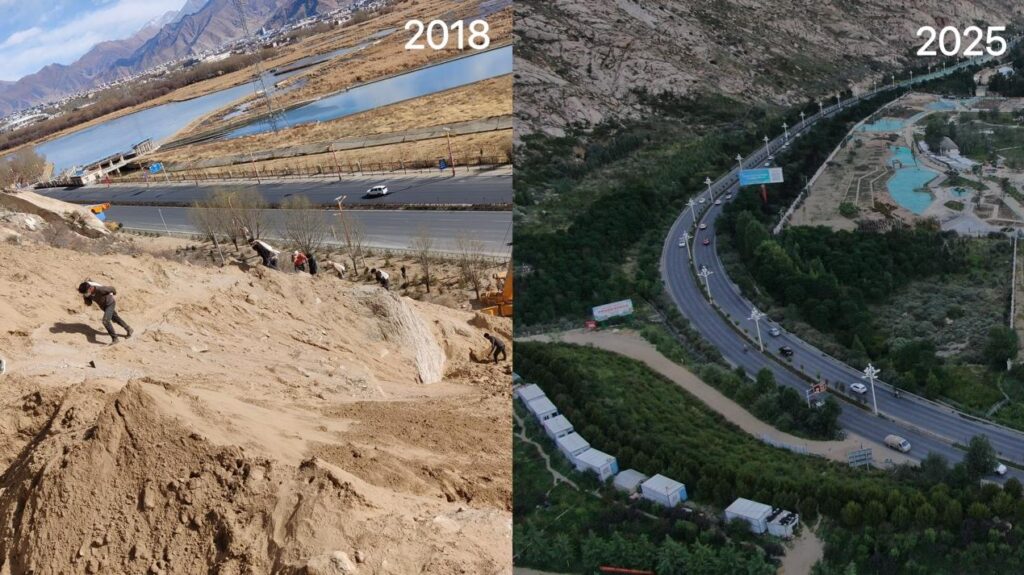
Pic 1: The greening efforts of Lhasa in 2018 vs. 2025. Source/CGTN.
Workers like Mi Jiu, a team leader, brave thin air daily to nurture saplings: “Planting trees at 3,000 to 4,000 meters above sea level is not easy. We climb mountains every day. We do maintenance mornings and evenings because, without care, our hard work would vanish.”
Rooted Results:
- Vegetation coverage of Lalu Wetland: Jumped from 60% (1999) to 95% (2025).
- Forest Coverage Goal: Targeting 36% by 2030, up from 19.5% in 2017.
- Target: 133,300 hectares (2 million mu) targeted for afforestation within a decade.
According to satellite imagery and surveys from previous years from the Lhalu Wetland National Nature Reserve Management Bureau, the vegetation coverage of the Lalu Wetland has increased from 60 to 95 percent. On this basis, in July 2025, Lhasa was awarded the title of “International Wetland City.” This achievement marks significant progress and international recognition in wetland conservation for Lhasa.
For resident Jigme Rigzin, the transformation is delightful: “The park is right near our home. After work, I take my wife and kids for a walk or a dance. The facilities are well-developed, and the environment keeps improving—life is happier.”
Tong Jige of the Greening Command Office emphasizes the vision: “This is about building an ecological highland where people and nature coexist.”
Eternal Echoes: Digitizing the Soul of the Snowy Plateau
(Embed video here if possible:https://news.cgtn.com/news/2025-08-15/Safeguarding-precious-cultural-relics-of-snowy-plateau-with-one-click-1FRGNRnq480/p.html)
While technology has helped to improve Lhasa’s greening efforts, experts have introduced new methods to restore the palm-leaf manuscripts.
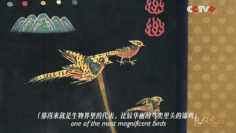
Beneath the crimson walls of the Potala Palace lies a treasure more fragile than gold: 29,000 palm-leaf manuscripts.
Etched on leaves of the Borassus flabellifer tree centuries ago, these manuscripts, among Buddhism’s oldest, journeyed from India and Nepal to Xizang.
Yet time gnaws at them.
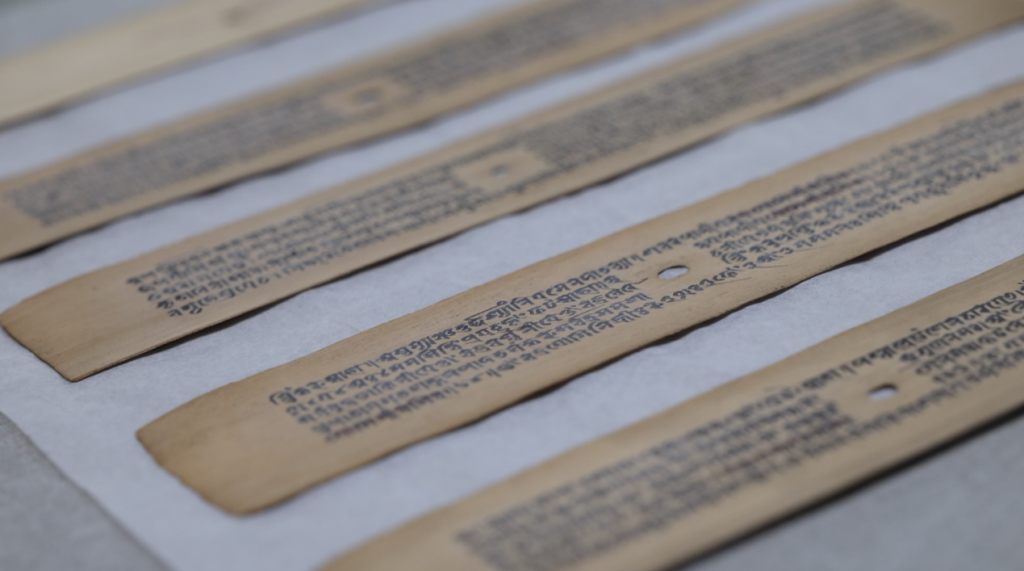
Pic 2: Palm-leaf manuscripts at the Potala Palace. Source/CMG.
“The greatest challenge is existing damage: lifted copper threads, deterioration, traces of improper repairs,” says Leng Benkai, Assistant Curator. “We fear these could worsen.”
A specialized team, formed in 2022 with intangible heritage masters Tsering Wangdu, wages a multi-front battle.
Natural adhesives crafted from pomegranate seed oil and elm bark restore the cracked surface.
However, sourcing original materials is near-impossible: “Some leaves are extinct. Others, we cannot get from India,” laments Wangdu. Script variations add complexity: “Characters differ across eras. Some we recognize, others are mysteries, missing parts leave ‘vulnerabilities’ in restoration.”
Using Technology as a Time Machine:
- Digital Archiving: High-resolution scanning captures every inscription, followed by OCR recognition and meticulous manual proofreading.
- Progress: 465 volumes (29,400 leaves) cataloged; 244 volumes digitally scanned; illustrations from 37 volumes typeset.
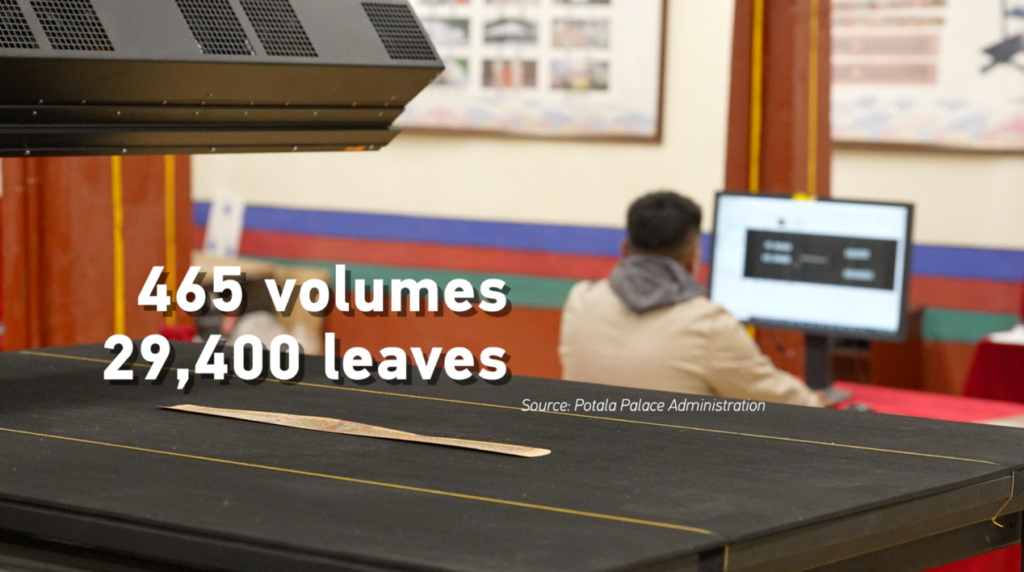
Pic 3: Current progress of digital archive of the manuscripts. Source/CGTN)
The team’s silent work ensures whispers of ancient wisdom endure, digitally immortalized for future scholars.
“Beyond saving texts, we honor a millennium of cultural dialogue,” stresses Leng. “These manuscripts testify to Xizang’s role in China’s unified, diverse civilization.”
Pasture to Prosperity: The Smart Ranch Revolution
(Embed video here if possible:https://news.cgtn.com/news/2025-08-08/Highland-herding-meets-high-tech-A-smart-ranch-on-the-snowy-plateau-1FF2FjXcNgI/p.html)
Smart technology has helped farmers boost their income in the countryside.
In Lhunzhub County, beneath snow-capped peaks, the Gesangtang Modern Agri-Pastoral Demonstration Park merges tradition with 21st-century innovation. Designed as a “full-spectrum, vertically integrated ecosystem,” its East Zone breeds yaks, while the West Zone houses dairy cows, feed processing, and fattening pens.
The park also tackles yak diseases and “genetic degradation,” offering farmers veterinary support and breed swaps. Its success fuels plans for ten more cooperatives, turning herding,a 5,000-year-old lifeway, into a driver of modern rural revitalization.
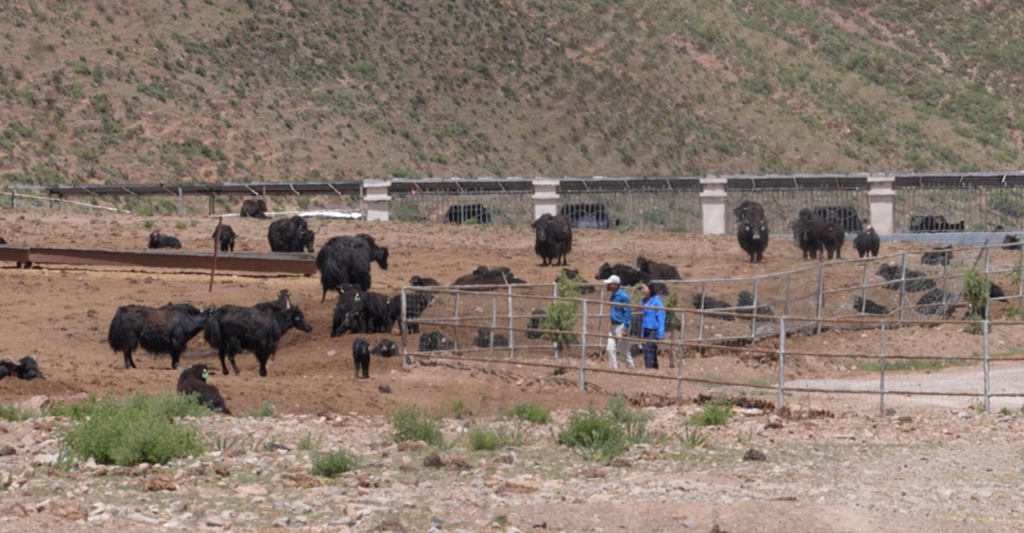
(Pic4: Yak breeding at the Gesangtang Modern Agri-Pastoral Demonstration Park. Source/CGTN)
“Yak populations face severe degradation nationwide due to inbreeding,” explains Zhang Fugang, Deputy Manager. “We purify breeds here, then supply farmers with premium bulls to replace ageing stock—ending inbreeding and boosting quality.”
High-Tech Meets High Altitude:
- Economic Impact: Sold 400 yaks (2023), generating 4 million yuan.
- Community Lift: Raised average household income by 1,200 yuan/year since 2018; created 116 jobs.
- Land & Livestock Synergy: Locals grow forage—potentially earning 1,400 yuan/mu with two seasonal harvests. (Source: Lhunzhub County Government)
Harmony in the Highlands: The 60-Year Tapestry
As fireworks light Lhasa’s skies for Xizang’s 60th anniversary, the threads of progress weave a cohesive narrative.
The greening project’s saplings symbolize ecological civilisation, proving that with sustained effort, even the harshest landscapes bloom. The Potala’s digital archivists embody cultural continuity, transforming relics into living legacies. Gesangtang Ranch reflects economic innovation, where yaks and algorithms coexist to uplift communities.
From once-barren peaks to flourishing valleys, Xizang’s transformation is a testament to resilience, ingenuity, and the enduring bond between people and their land.
What began as scattered initiatives in greening, heritage preservation, and rural development has converged into a shared vision: an ecological highland that treasures its culture while embracing modernity.
As the region steps into its next chapter, the momentum built over sixty years offers a simple but powerful promise that Xizang’s future will be as vibrant, rooted, and enduring as the mountains that cradle it.